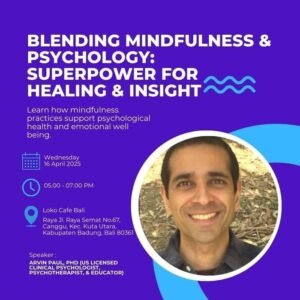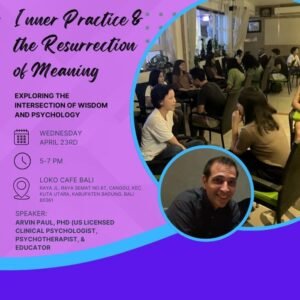
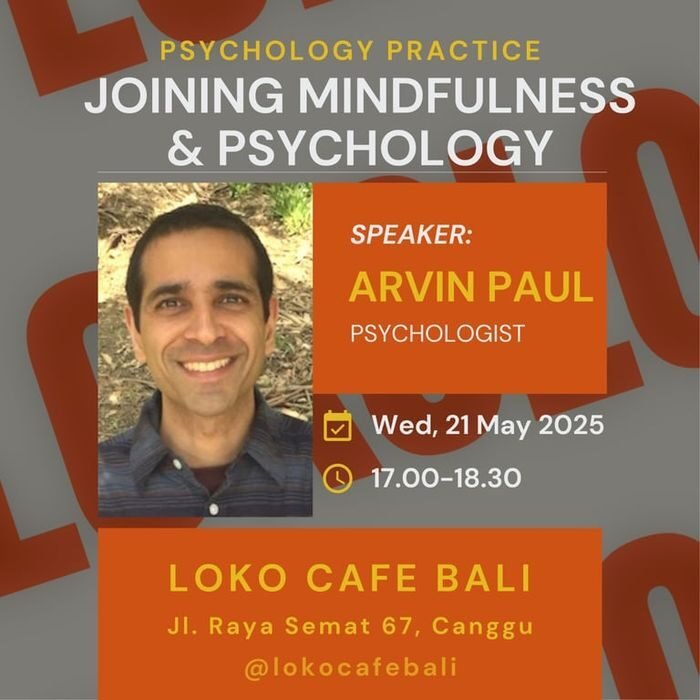
Larger series: This is part of a larger series of explorations delving into the world of psychology and its applications to everyday life.
Topic: In this meeting we explore the art and science of transformative self-exploration. Two thousand five hundred years ago, Socrates famously said that the “unexamined life is not worth living.” The power of these words still reverberates today. But why? Perhaps because for a life to be “well-lived,” it may not be sufficient to merely have one’s material, social, or career needs satisfied. That is to say, to live a truly meaningful and good life, a life satisfying to the soul, we need to attend to, care for, and nurture also our inner life. And, in order to do that we need some skillful means or practice to support that. It is to that aim that the method of transformative self-exploration addresses itself, though now with the new science of psychology and other disciplines that greatly aid and empower this endeavor.
Far from being some disembodied mental pursuit, to engage in a practice of self-exploration transforms what could otherwise be a mundane life of mostly external happenings into a life infused with a sense of deep meaning, purpose, and even at times ecstatic and thrilling adventure. For what is adventure if not jumping into our very own existence as an ever-unfolding mystery of revelation and discovery? True self-exploration encompasses the whole of our life, an always living question that asks what is this life, what is this existence, what’s reality, what is this?!
When the great poet Rainer Maria Rilke was pressed by a young poet for answers, he responded, “The point is to live everything. Live the questions now. Perhaps then . . . you will . . . without even noticing it, live your way into the answer.”
Key Takeaways:
Learning: Understanding the nature, mechanics, significance, and fruits of a psychologically-informed transformative self-exploration.
Practice: Learning the practices, methods, & supports of psychologically-informed transformative self-exploration.
Process: Learning about the various elements of process, such as various inner blocks, self-limiting beliefs, etc., and how these may be overcome or worked through.
Agenda for meeting: We begin our meetings with a warm-up exploration in small groups of 2-3, then move into a brief talk. After the talk, we again gather in small groups of 2-3 for an applied exercise or small group exploration, then come back together to share, and have time at end for free form connecting.
Who is it for: This event is free and open to all interested in the topic. Part of the vision of this series of events is the building of a community centered around deeper and more meaningful ways of connecting.